

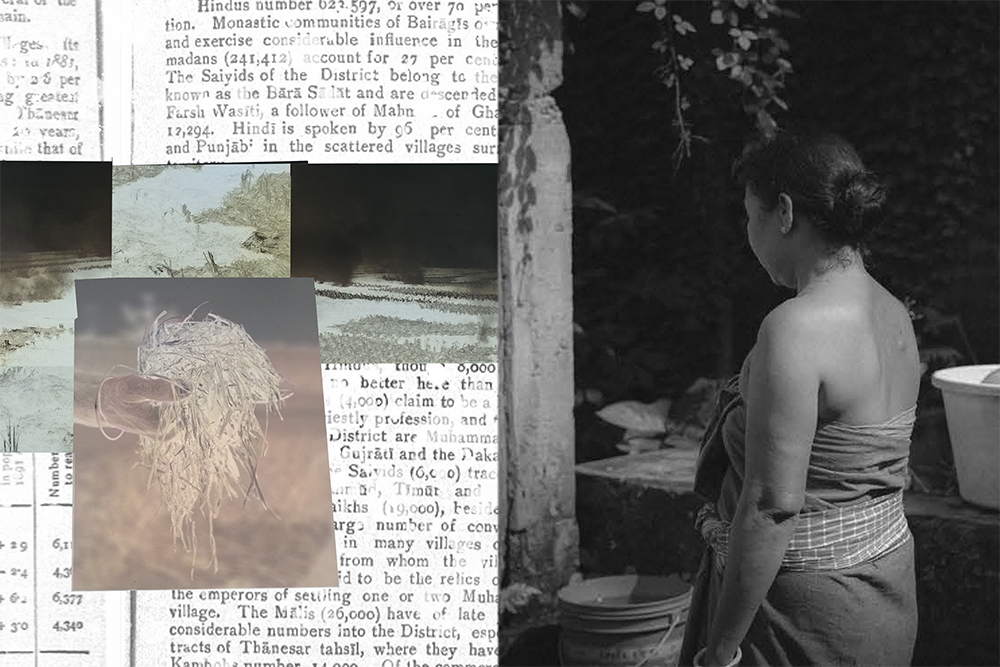
2025 | Akshay Bhoan & Dhiraj Rabha
Umrao Singh Sher-Gil Grant for Photography 2025
Grant Recipients
AKSHAY BHOAN
Title of the Project
THE LAW OF SMALL DISTANCES
DHIRAJ RABHA
DREAMS OF A MOTHER
Sher-Gil Sundaram Arts Foundation is pleased to announce the grantees for the Umrao Singh Sher-Gil Grant for Photography 2025 — Akshay Bhoan for his project The Law of Small Distances and Dhiraj Rabha for his project Dreams of a Mother.
Akshay Bhoan
The Law of Small Distances
Artist statement
I am a Punjabi who lives in Gurgaon
I visit Punjab every year
On the Haryana–Punjab border I see lorries packed close together, forming blocks
the farmers’ protest stretches for half a kilometre.
I go back to my grandfather’s house,
built like a jenga tower, one story over another.
My uncle is a doctor in Sunam.
A woman visits, she wants medicine for her son
She asks my uncle to cut a few pills from a strip
She only has so much money.
Next door to his pharmacy, the wall still carries bullet holes from 1978
on the adjacent one, stenciled: Jai Shree Ram
He takes me to nearby farms
He says there is more poison here than on the tongue of politicians
I photograph the burning fields.
Sometimes the smoke turns the sky black
and confuses the birds.
I photograph the rough streets
men selling milk, school children releasing pigeons
some boys demand to be photographed
They want to be seen with their bike
I photograph the life around land, canals, and rivers
I visit a friend who’s a patwari.
He tells me canal water first went to large landlords, then to small farmers
We drink whiskey, he tells me his score is too low to go to Canada
He opens his steel almirah; among the files a book
Punjab Settlement Manual, 1931
We read from it:
“Lord Dalhousie laid down emphatically that by our occupation of the country, after the whole Sikh nation had been in arms against us, we have acquired the absolute right of conquerors, and would be justified in declaring every acre of land liable to Government assessment.”
I go to brick kilns near the highway.
My cousin talks to the owner while I photograph bricks stacked up
A tree is being cut in the distance
I can’t see it but hear the axe
Back in Gurgaon, I return to the darkroom.
I develop the negatives, look at them on a light bed.
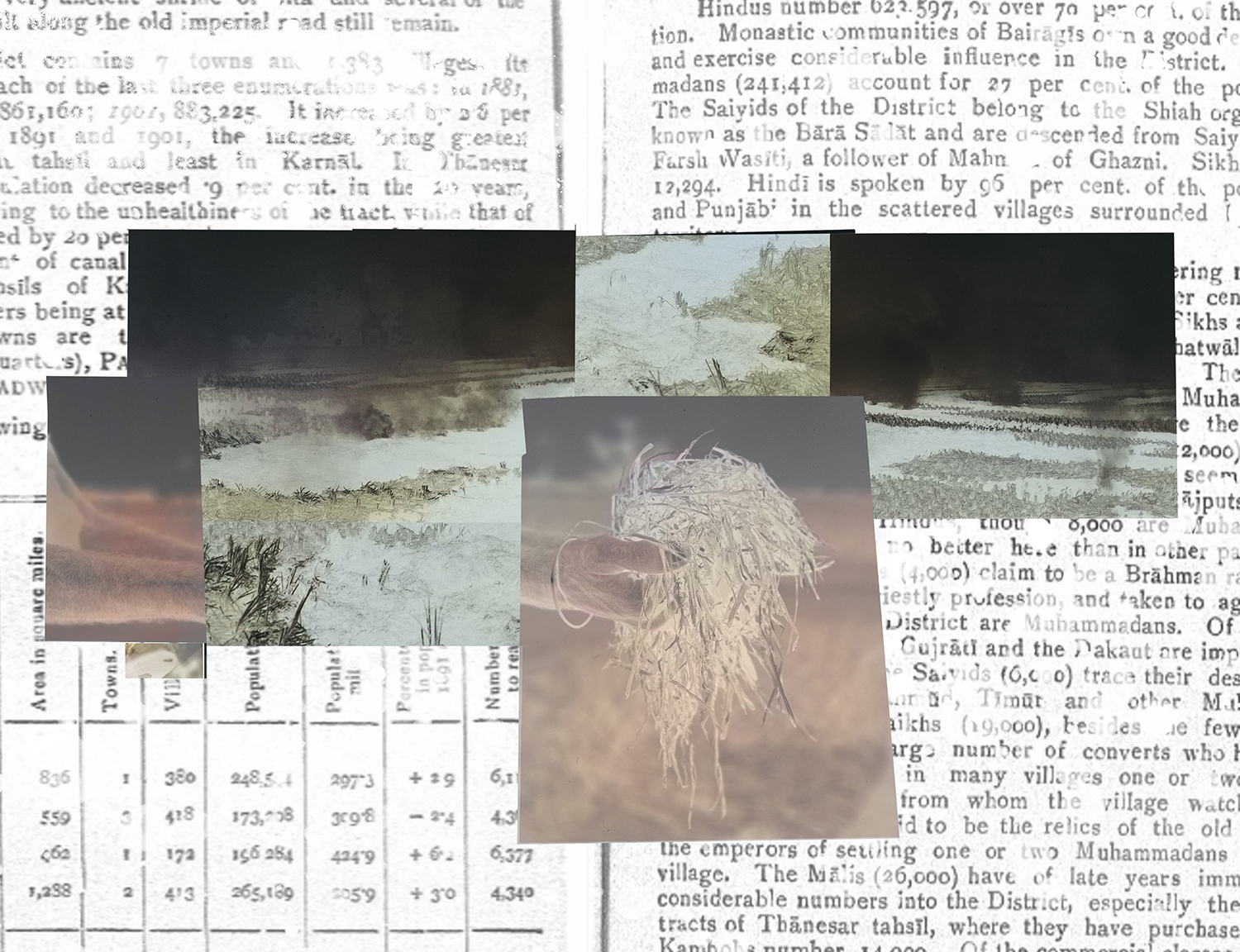
I cut them up, make smaller pieces,
and reorder them as a grid
At first I thought I was looking at division,
but it seems the real study is what refuses to remain divided.
Looking at the images, it felt like a bird’s-eye view of a field
and of the people who sing poems
at the time of struggle and resistance.
My project examines divisions and connections in Indian Punjab – long regarded as India’s breadbasket and testing ground for agricultural policy. Through photography and archival research, it investigates intertwined histories of farming, division, and ecological decline, and how colonial systems of ownership and measurement shape the present landscape. Using photography as mapping, it examines how lines drawn on paper; legal or agricultural, translate into lived divisions on the ground.
Returning to Patiala, Bathinda and Sangrur districts over recent years, I’ve photographed agricultural sites while researching their bureaucratic and historical logic. My reading includes A Tour in Punjab (1878–79), the Punjab Settlement Manual (1931), The Partition of Punjab by Kirpal Singh (1972), post-partition policy studies on land reform and the Green Revolution. Alongside I have been gathering oral histories, folk songs, and local poetry about land, displacement, and inheritance. These conversations include farmers, brick-kiln workers, and families living on divided ancestral land. Together, these materials form an evolving counter-archive that connects ecological degradation with longer cycles of policy, memory, and extraction.
This research comprises the project’s first stage. The next stage focuses on developing its visual and material form. I plan to visit remaining districts to document sites not yet photographed and to expand the archive of related colonial and governmental records. These will be re-layered as photographic collages that merge the languages of law, landscape, and collective memory. This approach draws from Édouard Glissant’s ‘Right to Opacity’—using the negative’s resistance to legibility and the fragmenting grid to create representations that refuse to be fully grasped.
The images currently exist as digital scans from negatives. With grant support, I will create layered transparency prints that connect photographic images with bureaucratic documents, to be hung in space or viewed through light boxes.
Writing remains integral to the process. Short prose texts developed during fieldwork accompany the images, reflecting on how histories of division and measurement continue to shape human and ecological relationships in Punjab. The grant will allow me to bring the work back to its sites of origin, organising small presentations in villages and towns for families and workers involved. Conceived as spaces for dialogue, they let local voices question how the land is seen and remembered.
Akshay Bhoan is a lens based artist. His practice explores the transitory nature of knowledge, memory, and perception – unfolding through photography, mixed media, and interactive installation. Bhoan constructs dialogues between past and present, tracing how historical residues shape identity and visibility in contemporary life.
Dhiraj Rabha
Dreams of a Mother
Artist statement
She dreams of rivers that once held her reflection,
of hills she could once climb without fear.
Between the smoke-stained walls of a detention camp and the vast silence of the forests, a mother
dreams, not of escape, but of return.
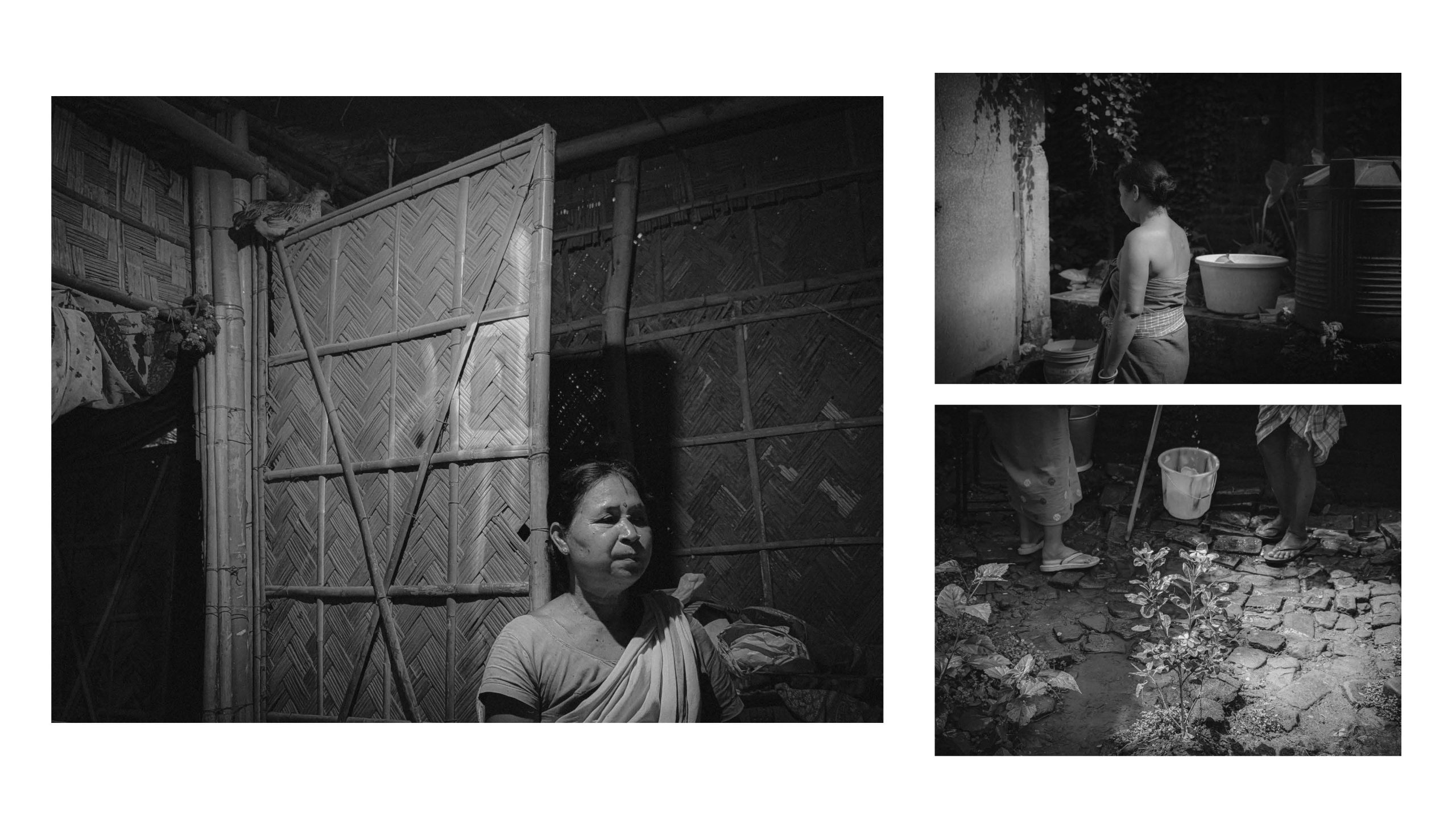
This project arises from those dreams, quiet, persistent, and deeply human. It continues my long-term exploration of memory, home, and the lingering shadows of insurgency in Assam. Rooted in my personal history, Dreams of a Mother focuses on my mother, who has lived for decades in an ex-ULFA detention camp following my father’s surrender in 1999. Because of her marriage to a man involved in the armed rebellion, she too was forced into a life of fear, displacement, and endurance, hiding from the Army, raising two children, and carrying the silent burden of survival. Now, after years of living within the camp, her desires are tender and grounded: to build her own home, to return to her ancestral village, to fish again, to climb the hills, to bathe in waterfalls. This project becomes an artistic dialogue with those unspoken wishes, a poetic and visual reconstruction of the life she imagined but never lived.
The photographs will unfold across three interconnected spaces: the detention camp, my ancestral village, and the adjoining forests, tracing a journey through the physical and emotional geographies that have shaped my mother’s existence. The images will reveal how conflict redefines women’s lives, compelling them to hold families together, to dream silently, and to endure with quiet strength. It will question how women carry the memory of violence, how they rebuild and reimagine their identities within and beyond the ruins of history. Ultimately, Dreams of a Mother stands as a reflection on resilience and the desire for freedom, not through political narratives, but through intimate dreams that seek to reclaim the right to live, to remember, and to imagine anew.
Beyond documentation, Dreams of a Mother seeks to become a living archive, a space where memory, longing, and resistance coexist. Building upon my earlier documentary series that traced the collective memory of communities shaped by insurgency, this new body of work shifts toward an introspective, dreamlike mode. It will extend my ongoing practice of transforming personal histories into shared reflections on loss, resilience, and the fragile hope of returning home. The visual language of Dreams of a Mother will unfold through a series of surreal and metaphorical tableaux that blend reality with imagination. Each frame will reimagine my mother’s life and inner world through dreamlike compositions that hover between memory, desire, and myth. The project will construct a poetic, multi-layered narrative that transforms my mother’s memories and unrealised dreams into a visual mythology of resilience and remembrance.
Dhiraj Rabha is a visual artist based in India. Raised in an ex-ULFA detention camp in Goalpara, he explores themes of displacement, identity, and resilience. His practice, primarily in painting, delves into the sociopolitical narratives of his surroundings, often reflecting his personal experiences and cultural heritage. Rabha’s notable projects include exhibitions at the Serendipity Arts Festival, curated by Vidya Sivadas, and the Next-Step Residency by the Sher-Gil Sundaram Arts Foundation. He has been recognized with the Generator Cooperative Production Fund by Experimenter (2023–24) and a production grant under the Art Practice Programme from India Foundation for the Arts (IFA) in 2022.
Jury
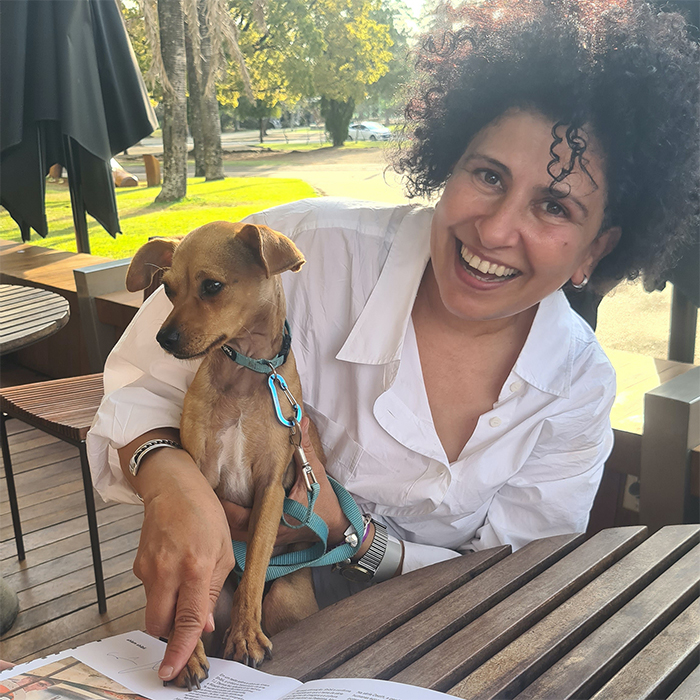
Ahlam Shibli is an artist, whose work has been presented in solo and group exhibitions internationally. Her work has been presented, among others, in Pompidou Metz, LUMA Westbau, LUMA Arles, Museo ICO, Seoul Museum of Art, Fotonoviembre, IVAM, Museum der Moderne Salzburg, MSU, UGM, Remai Modern, S.M.A.K., documenta 14, Cassa di Risparmio, Camera Austria, Carré d’Art, Zachęta, Qalandiya International, Henie Onstad Kunstsenter, Muzeum Sztuki, MACBA, Jeu de Paume, Museu Serralves, Museo Reina Sofía, Haus der Kunst, Galeria Kombëtare e Kosovës, Thessaloniki Biennale, Fondazione Sandretto Re Rebaudengo, Tate Modern, Muzeum Sztuki Nowoczesnej w Warszawie, Darat al Funun, Château de Sédières, CGAC, Pompidou Paris, Documenta 12, Bienal de São Paulo, Kunsthalle Basel, Busan Biennale, Seville Biennial, Istanbul Biennial, Torino Triennale, Yokohama Museum.
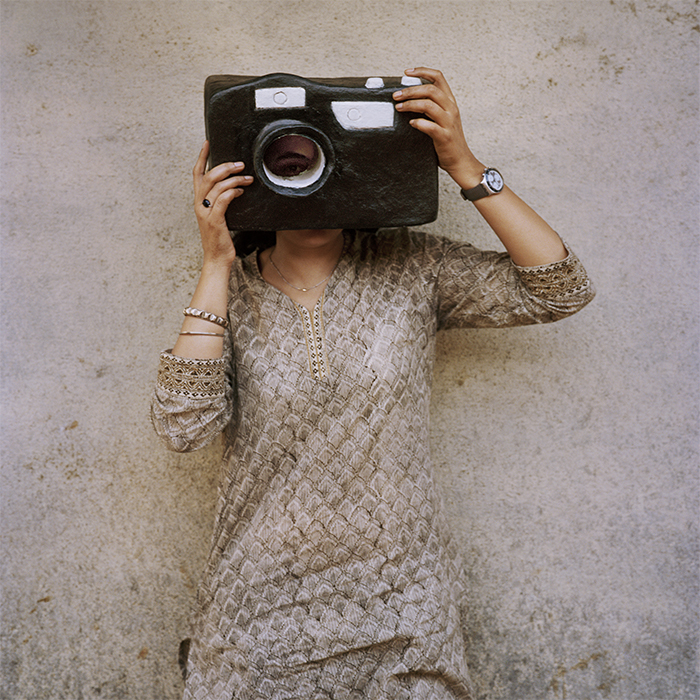
Gauri Gill is a Delhi based photographer. She has exhibited within India and internationally, including The V&A Museum, London; Louisiana Museum of Modern Art, Humlebæk; Schirn Kunsthalle, Frankfurt; 58th Venice Biennale; MoMA PS1, New York; Documenta 14, Athens and Kassel and the Kochi Biennale, Kerala. She has also consistently exhibited at locations outside of the art world, including public libraries, rural schools and non-profit institutions. She received the Prix Pictet award in 2023, and the Grange Prize in 2011, among other honours. She has recently published two books about her multi-year collaborations with Adivasi artists in Maharashtra, India, called Fields of Sight and Acts of Appearance, both published by Edition Patrick Frey, Zurich.

Sanjay Kak is an independent documentary filmmaker and writer whose work includes the films Red Ant Dream (2013), Jashn-e-Azadi (2007), and Words on Water (2002). He is the editor of the anthology Until My Freedom Has Come – The New Intifada in Kashmir and of the critically acclaimed photobook, Witness – Kashmir 1986-2016, 9 Photographers which he published independently under the imprint of Yaarbal Books. At Yaarbal he has also edited and published the recent Cups of nun chai by Alana Hunt. A self-taught filmmaker, he writes occasional political commentary, and reviews books that he is passionately engaged by. He has been active with the documentary cinema movement in India, and with the Cinema of Resistance project.