

2026 | Critical Praxis, 1 Shanthiroad
Critical Praxis
The Next Step Residency programme was established by 1ShanthiRoad Studio/Gallery in 2016 with the support of SSAF, to create a platform for five emerging artists to reside together at 1Shanthiroad Studio for four weeks, allowing them the liberty to experiment with ideas, materials and collaborations. The residency programme provides artists with an environment that is conducive to bridging the gap between the support structure provided by educational institutions and their career beginnings.
SSAF’s support for the Next Step residency programme culminated with a closing grant in 2025. ‘Critical Praxis’ will engage a cohort of more than 50 alumni of the Next Step Residency, while introducing a curator-in-residence and a writer-in-residence to this new expanded programme.
I. Curator-in-residence
G. Vignesh
II. Artists-in-Residence
Boris Colin Alphonse
Jit Natta
Rahee Punyashloka
III. Writer-in-Residence
About the residency
Duration of Residency: 2 Months
Are you an emerging curator who wants to develop and produce an exhibition from the ideation stage, up to the process of deinstallation? You will conduct art historical research and be in conversation with artists as they develop their work. This is an opportunity for hands-on training in curatorial work and exhibition making, while being located at 1ShanthiRoad, which has been integral to the art ecosystem of the country.
Accommodation, a per diem for food and transport, an honorarium and an exhibition production budget will be provided to the curator.
How it works:
In the first month, the curator will live and work at 1Shanthiroad, spending time with the accumulated memory of the former resident artists and the vast archives to study shifts in art practice over the past ten years. The curator will select three Next-Step Residency alumni as artists-in residence, along with the 1ShanthiRoad team. At the end of the first month of their residency, the curator will prepare an exhibition proposal, which will include the work that will be produced by the three selected artists-in residence, as well as work by other artists from the Next Step Residency since its inception.
In the second month, the three artists-alumni will be in residence along with the curator. The artists will create works specifically for the exhibition which marks the culmination of the curatorial residency and the artists’ residency.
Accommodation, a per diem for food and transport, and an honorarium will be provided to the curator.
About the curator-in-residence
G. Vignesh is an interdisciplinary artworker, art writer, and curator who lives and works between Hyderabad and other places. His practice engages with memory, ecology, and collective resistance. Trained in art history and painting, he explores how embodied actions, site-responsive interventions, and performative poetics can create spaces of care and critique in the face of social and ecological crises. He is a founding member of Possible Futures. His projects often unfold in public and contested spaces, seeking to blur the lines between ritual, protest, and art, always returning to the question: what futures can we sustain, together? His contributions to exhibitions, festivals and publications foreground collective memory and cultural activism.
About the residency
Duration of residency: 1 month
Three artists will be selected from the Next Step Residency alumni via an Open Call that will be proposed by the Curator-in-Residence. The artists will work in tandem with the curator to produce works specifically for a curated exhibition at 1ShanthiRoad at the culmination of the month-long residency.
The selected artists can follow up on or develop an idea that may have been seeded in their first stint at 1ShanthiRoad. Through this project, we ask a simple question: How do you extend an idea, a question or a direction that was birthed during the residency, but could not be resolved due to various factors? Alternatively, we are also interested in the directions that the artist may have taken from their time at the Next Step Residency, in order to trace a trajectory for an artist’s practice.
Accommodation, a per diem for food and transport, an honorarium and a production budget will be provided to each artist.
About the artists-in-residence
Boris Colin Alphonse works with drawing and constructed forms, arranged as installations, instruments, publications and web interfaces. Invented metrologies and borrowed documentary formats feature prominently in his practice, often modulated with absence, inherited labour and the surfaces of instruction. Recent projects have explored ideas around land and measurement, speculative archaeology, the embodied physics of fisherfolk knowledge, and the conjunction of Sangam poetry and engineering drawing. Boris is a recipient of the FICA Emerging Artist Award (2026–27).
Jit Natta, a socially engaged interdisciplinary art practitioner, is based between Kolkata and Ashokenagar, West Bengal. Jit’s practice operates across performance, installation, sculpture, and archival research, focusing on caste histories, migration, labour, and marginalized performative traditions, particularly those of the Natta Community in Bengal. Grounded in fieldwork, oral histories, and community archives, their work reactivates ancestral practices such as Jatra through research-driven, site-responsive methodologies.
Rahee Punyashloka is an artist, writer, researcher, and experimental filmmaker based out of New Delhi and Bhubaneswar, India. He works with glitches, ghosts, and subterranean genealogies to activate the Dalit body as a site of assertion and liberatory praxis. Recent exhibitions include KHOJ (New Delhi), West Space (Melbourne), and HKW (Berlin) among others. He is also the recipient of the FICA Emerging Artist Award (2025).
About the residency
Duration of Residency: 1 Month
Are you a writer who is passionate about engaging with contemporary art practices and the contexts in which they emerge? This Residency offers you the space and time to engage in archival research, interview artists and to focus on your writing.
How it works:
Across one month, the writer will familiarise themselves with the 1ShanthiRoad archives in order to understand the context in which the city’s contemporary art practices are situated. They will conduct interviews with artists from a wider network of artists who have engaged with 1ShanthiRoad over the last 25 years. The writer will propose, and work on an essay which highlights material from the archives while also engaging with a primary research question of their choice about contemporary artistic practices and their trajectories in the city of Bangalore (including contemporary histories) of the city. The essay written during the residency will be published.
Accommodation, a per diem for food and transport and an honorarium will be provided to the writer.
Leak in Archive
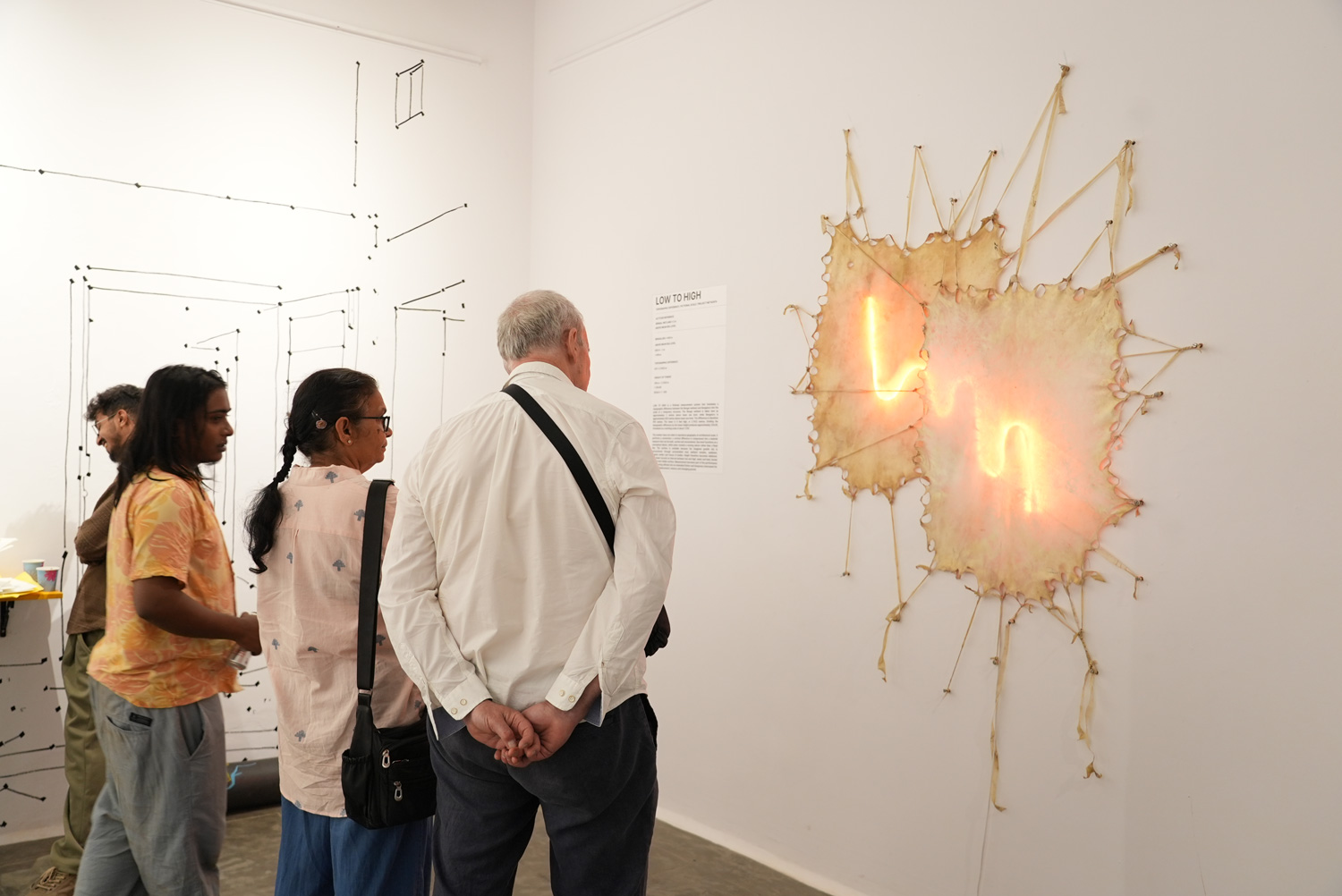
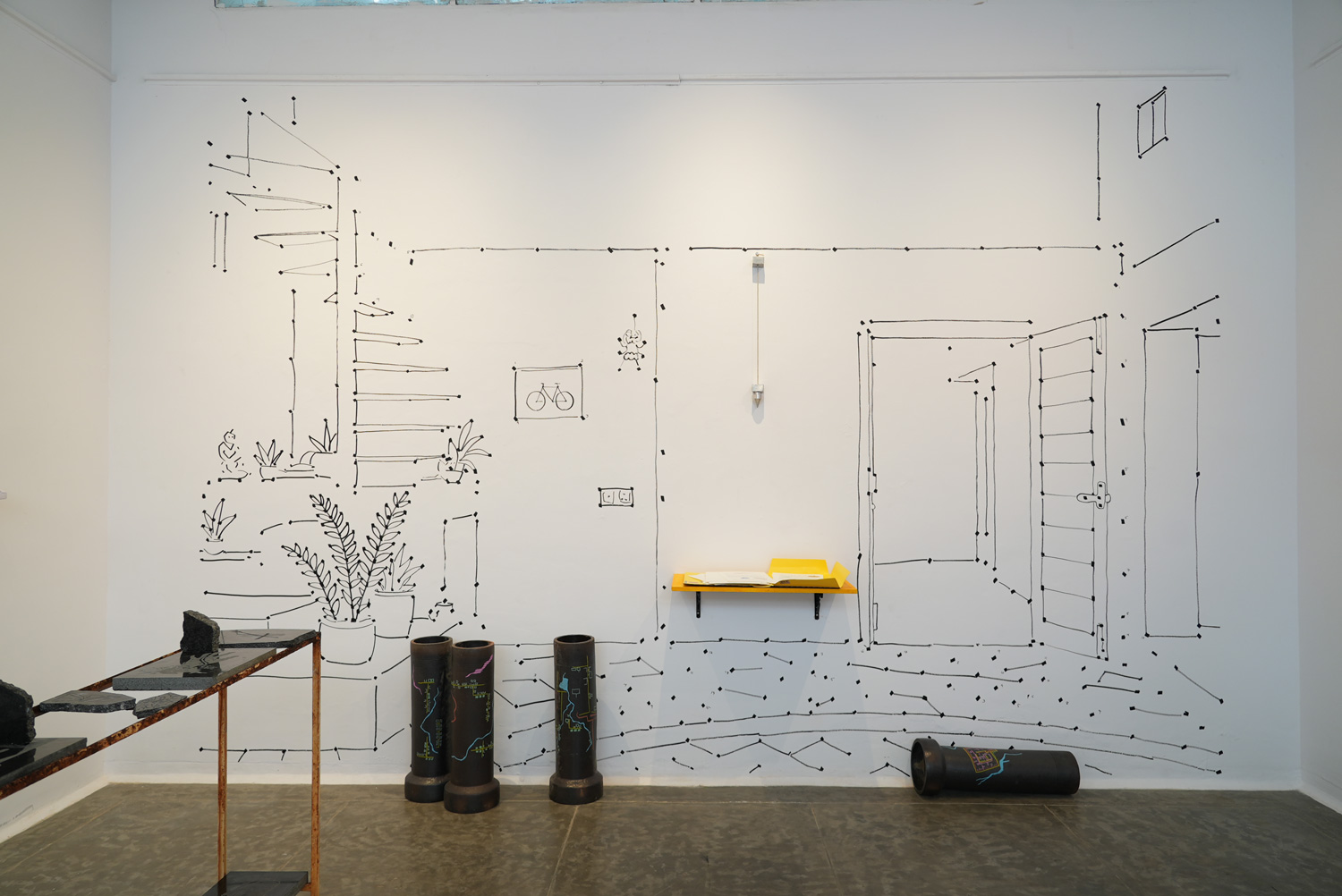
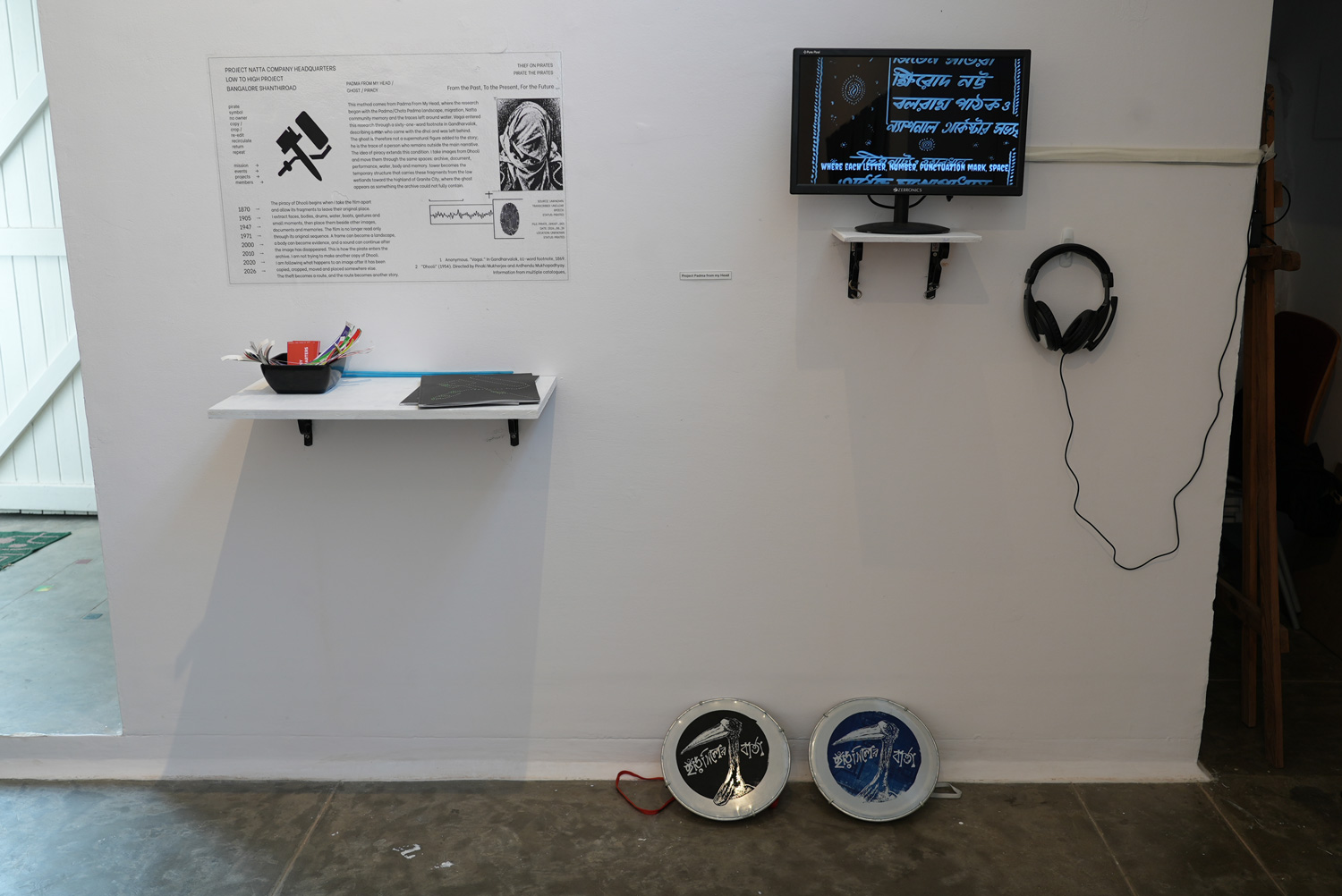
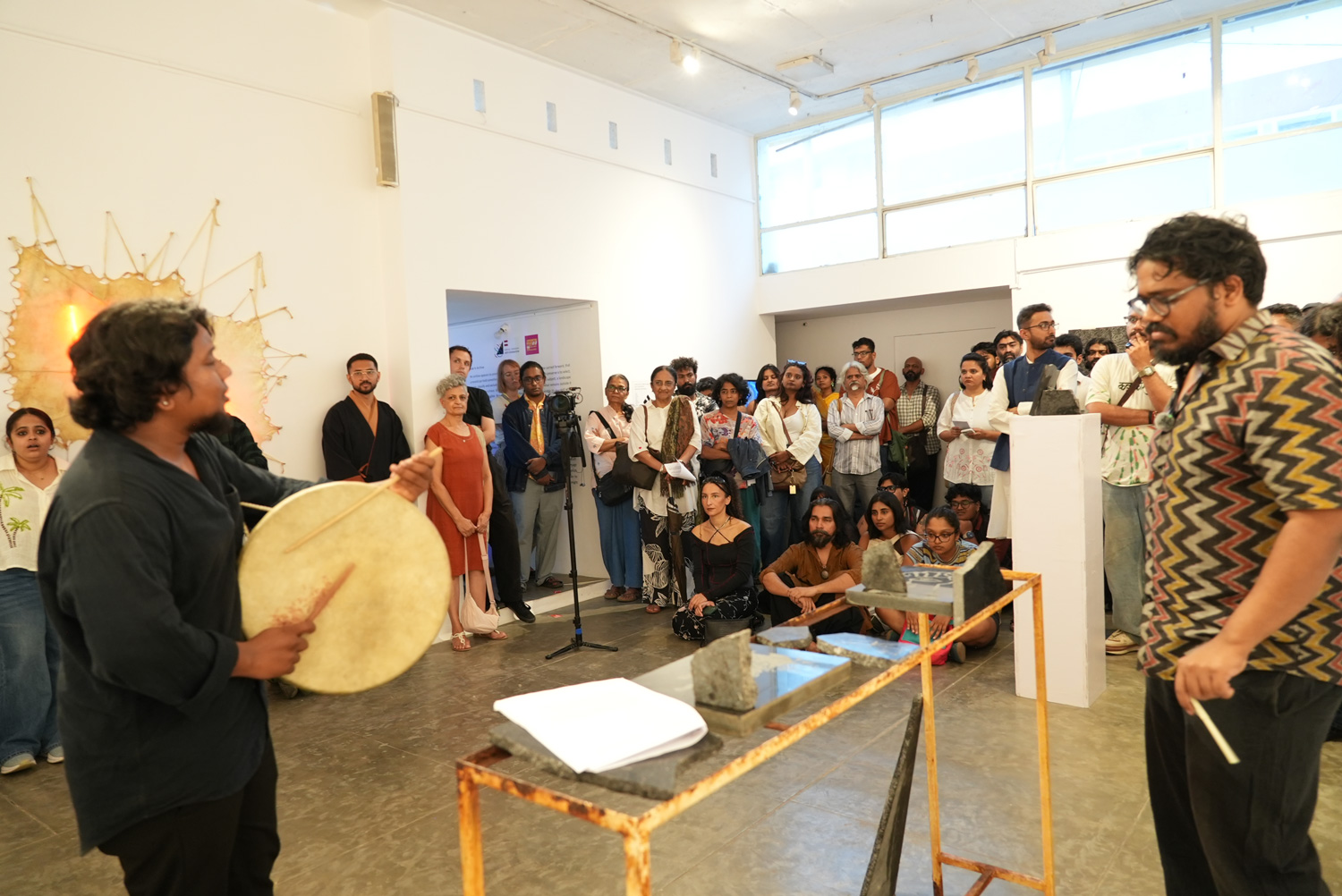
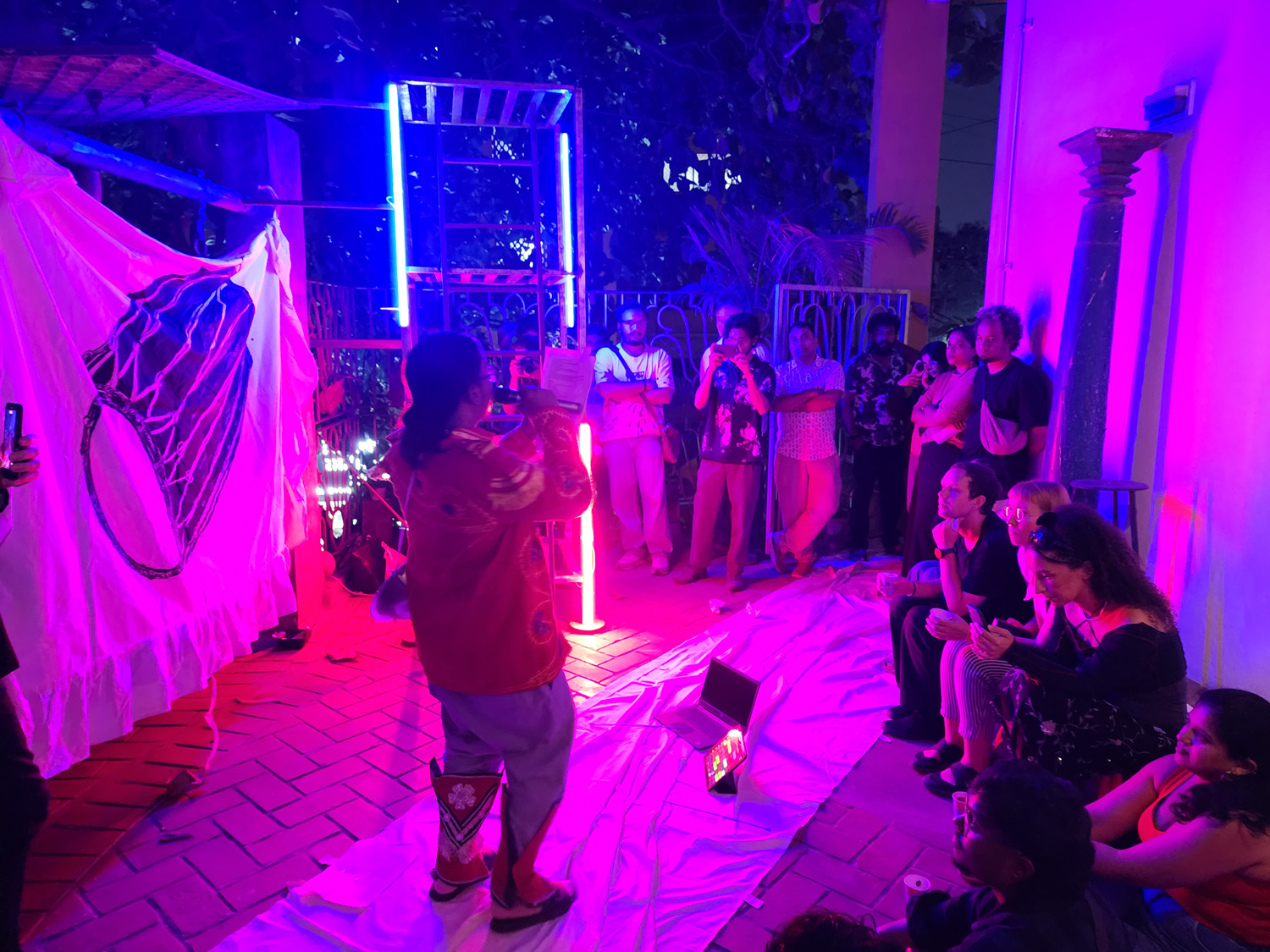
Leak in Archive, emerges from an encounter between three practices. It considers the archive not as a stable repository of the past, but as an active and contested infrastructure through which things are recorded, classified, transmitted, displaced and made legible. What becomes a record? What remains outside it? How do memories, materials and histories persist when the systems designed to contain them cannot fully hold them?
Rather than bringing the artists together around a predetermined theme, G. Vignesh, curator and art-practitioner, looked for points of friction, resonance and unexpected connection emerging between their practices.
Boris Colin Alphonse’s Everything here is on file examines the authority of records, systems of measurement, speculative documentation and the infrastructures through which knowledge becomes legitimate. His practice moves between evidence and fiction, asking how documents construct certainty and what happens to that certainty when the systems that produce records become unstable.
Jit Natta’s Low to High extends Padma From My Head approaches the archive through movement, memory and embodied transmission. Stories, objects, food, language, performance, images and other forms of lived knowledge move across places and generations, refusing the stability of a fixed repository. The figure of the ghost becomes a way of thinking about memories and histories that remain simultaneously absent and present—returning through bodies, objects and gestures.
Rahee Punyashloka’s Anatomy of a Smooth Surface follows granite across geological, industrial and technological histories. Beginning with extraction and labour, the work traces the transformation of stone through image-making technologies, from stone etching and sandblasting to digitally generated imagery, while opening a material connection between geological matter and computational infrastructures. Stone and screen become part of an unexpectedly shared material history.
The three practices approach their questions through markedly different scales and durations: the bureaucratic time of the document, the embodied time of memory and transmission, and the geological and technological durations carried by material. Their relationship is therefore not chronological or illustrative. It emerges through traces, residues, gaps and forms of leakage— where something from one temporal or material register enters another.
Curated through the Critical Praxis Curatorial Residency, Leak in Archive is ultimately an invitation to slow down, look again and follow the fragments— asking what might become visible when the structures that organise knowledge begin to leak.